
Why You Only Need 1,000 Customers to Succeed in the U.S. Food Market
The U.S. food market is one of the largest in the world.
In categories like salty snacks alone, Americans spend more than $31 billion annually. Major players such as Frito-Lay control a significant portion of that space.
For many international food brands looking to import into the United States, this creates a dangerous assumption:
“We need massive scale to compete.”
That assumption is wrong.
You do not need millions of customers to succeed in the U.S. market. You need the right customers, buying consistently.
The Real Entry Strategy for Imported Food Brands
When entering the U.S., especially in competitive categories like snacks, success does not come from chasing national distribution immediately.
It comes from building a focused, repeatable demand model.
Here is a simple way to think about it:
- 1,000 loyal households
- Purchasing your product 6 to 8 times per year
- At an average price point that supports your margins
This alone can generate a meaningful business, often in the range of $200,000 to $300,000 in revenue.
That is not just revenue. That is proof.
And in the U.S. retail system, proof is everything.
Why Shelf Presence Is Not the Goal
Many food entrepreneurs believe that getting on the shelf is the milestone.
It is not.
Being on the shelf simply creates the opportunity to sell. It does not guarantee movement.
Retailers are not evaluating whether your product is present. They are evaluating:
- How quickly it sells
- How often it is reordered
- How it performs compared to competing products
If your product sits, it gets replaced.
This is especially true when competing against established companies like Frito-Lay, which operate with strong distribution, brand recognition, and promotional support.
The Numbers That Actually Matter
When importing food into the U.S., success is driven by a few key metrics.
These are the numbers that determine whether your product grows or disappears:
Sales Per Store Per Week
This measures velocity. It tells retailers whether your product deserves its shelf space.
Reorder Frequency
Consistent reorders indicate real demand, not just initial curiosity.
Household Penetration
How many repeat customers are you building within a defined market?
Purchase Frequency
Are customers coming back regularly, or was it a one-time trial?
Price and Margin Alignment
Does your pricing support both retailer expectations and your profitability?
Understanding these numbers allows you to build a business based on performance rather than assumptions.
Competing in the U.S. Market Without Massive Scale
Large companies dominate shelf space, but they also operate at scale. Smaller brands can compete by being more focused.
Instead of trying to win the entire market, successful imported brands:
- Target specific regions or communities
- Build strong local demand
- Refine their product based on real consumer feedback
- Expand only after proving consistent performance
This approach reduces risk and increases the likelihood of long-term success.
Why This Matters for International Food Brands
If you are importing food into the United States, the biggest mistake you can make is trying to grow too fast without proof.
The U.S. market rewards:
- Consistency
- Repeat purchases
- Reliable supply
- Clear positioning
It does not reward overexpansion without performance.
Starting with a focused group of loyal customers allows you to:
- Validate your product
- Build retailer confidence
- Strengthen your operations
- Create a foundation for expansion
Building a Sustainable Entry Strategy
The goal is not to launch everywhere.
The goal is to build something that works, then scale it.
A disciplined approach looks like this:
- Enter a focused market
- Build repeat purchase behavior
- Track performance metrics
- Improve product and positioning
- Expand into adjacent markets
This is how brands move from small beginnings to meaningful scale.
Ready to Enter the U.S. Market the Right Way?
If you are planning to import food into the United States and want to build a strategy based on real numbers, not guesswork, schedule time with Tim Forrest.
👉 Book your strategy session at:
www.timforrestmarkets.com
You can also access the free salty snack category report at:
👉 www.timforrest.com
You do not need millions of customers to win. You need the right customers, buying consistently.
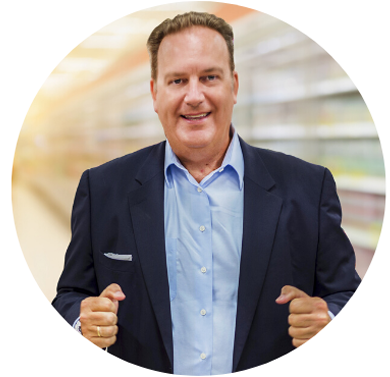 “Hi I’m Tim, and I love the food business! I’ve been helping large and small companies and entrepreneurs achieve success for decades. My consulting projects have contributed to major successes for my clients, including many with 100%+ year-over-year growth rates. I enjoy sharing my expertise, and hope you find these blog posts enlightening. Please reach out to me with any questions or comments.”


Share This Story
Related Posts



Let’s Talk




What We Do
 We help food entrepreneurs and established companies get their products onto shelves and into the hands of consumers. Through personalized collaboration, you’ll learn to succeed using a proven path of marketing, sales, merchandising, distribution and business growth strategies. We’ve generated over $1 billion in revenue and company valuations for our clients. Let us put our expertise to work for you.


