
California Just Created a New Food Label. Is Your Product Ready?

California has created a new government-backed certification for food products that meet its non-ultraprocessed standard. For food manufacturers, importers, and brands selling in California, the question is no longer whether this conversation is coming. It is whether your product will be ready when the certification system is fully operational.
California has just taken another major step in the growing national debate over ultra-processed foods. On September 28, Governor Gavin Newsom signed AB 2244, establishing California’s “Non-Ultraprocessed Certified” food certification program and creating a standardized seal that qualifying food products will eventually be able to display. California describes the program as the first state-backed certification of its kind in the nation.
The significance for food companies goes well beyond a new logo on a package. A government-backed certification has the potential to influence product formulation, ingredient selection, packaging, consumer perception, retailer conversations, and ultimately how brands compete for attention on the grocery shelf.
The program will not be operational immediately. California’s Department of Public Health has until June 1, 2029, to accredit certification agents, and products using the certification seal will need to be certified by an accredited agent. Certification must also be renewed at least every three years, and a product that is reformulated will need to be recertified before continuing to use the designation.
That gives manufacturers time to prepare. It also gives them time to determine whether their current products are positioned to qualify.
Tim Forrest breaks down what California’s new food certification could mean for food manufacturers, importers, and brands competing in the U.S. market.
The video provides a quick overview of the development. Here is what food companies should understand about the new certification and why it deserves attention now.
This Is More Than Another Food Label
Food companies have become accustomed to certification seals and front-of-package claims. Organic, Non-GMO, gluten-free, plant-based, and other designations can help consumers quickly understand something about a product without reading every line of the package.
California’s new Non-Ultraprocessed Certified designation enters that same competitive environment, but with an important distinction. The program is being established through state legislation and will use accredited certification agents to determine whether products meet the applicable requirements.
That creates a very different situation from simply putting a marketing phrase such as “clean ingredients” or “minimally processed” on a package.
Under AB 2244, a food product cannot use the Non-Ultraprocessed Certified seal unless it has been certified by an accredited certification agent. California will establish a standardized seal for the program, creating the potential for a recognizable designation across participating products.
For brands, that means the certification could eventually become another tool for communicating product attributes to consumers and retailers. But before a company can use the seal, it needs to know whether its product actually qualifies.
And that starts with the formula.
The Formula Matters More Than the Logo
The biggest mistake a food company could make is treating this as a packaging issue.
The package is the final expression of the product. The formula comes first.
California has established a statutory definition of “ultraprocessed food” that considers specific additives and, in the broader definition, factors such as saturated fat, sodium, and added sugars, along with certain other ingredients and characteristics.
However, the certification criteria in AB 2244 are more specific than simply asking whether a food is high in sugar, fat, or sodium. The certification provision incorporates particular additive-related criteria from California’s existing ultraprocessed food definition and establishes additional conditions that products must satisfy to qualify.
That distinction is important for manufacturers.
A company cannot simply look at its Nutrition Facts panel and decide whether its product qualifies. The ingredient list, formulation, manufacturing process, and specific regulatory criteria all need to be evaluated.
For brands considering certification, this means the first step is not redesigning the package. It is understanding exactly what is in the product and how California’s rules apply to it.
What Happens If Your Product Does Not Qualify?
This is where things become more interesting for food manufacturers.
Imagine a product that has been successfully selling for years. Consumers know it. Retailers know it. The manufacturing process is established, suppliers are contracted, and the company has invested heavily in its packaging.
Then the brand evaluates California’s new certification and discovers that its current formula does not qualify.
What happens next?
There may be no reason to immediately reformulate. Certification is a strategic decision, and changing a successful product can introduce significant costs and risks. But the company now has a decision to make.
Does the brand keep the current formula and compete without the certification? Does it explore a reformulation? Does it create a separate product line? Does it develop a new product specifically designed to meet the emerging standard?
Those decisions require more than a regulatory review. They require an understanding of the economics of the product and the competitive market.
Reformulation can affect taste, texture, shelf life, manufacturing processes, ingredient costs, packaging, supplier relationships, and consumer acceptance. Removing one ingredient does not necessarily mean the product remains identical in every other respect.
That is why brands should evaluate the implications before making changes.
California Could Create a New Retail Advantage
The potential impact does not stop with packaging.
AB 2244 also establishes a retail visibility requirement for certain grocery stores. Once the certification system is operating, grocery stores with more than $10 million in annual store sales that offer more than 25 certified products will be required to make at least three certified products clearly identifiable within the store.
That does not mean every certified product automatically gets premium shelf space, nor does it mean every California grocery store will create a dedicated non-ultraprocessed section.
But it does create an interesting retail dynamic.
If consumers begin recognizing the certification and retailers are required to make qualifying products more identifiable under the law, the designation could become commercially useful for brands competing in crowded categories.
A certification that helps a shopper identify a product more quickly can become valuable in a market where brands have only seconds to capture attention.
For manufacturers, that means the conversation is not simply about compliance. It is also about positioning.
Food Brands Should Think About the Certification Before Designing Their Next Product
The companies that have the easiest time adapting to new standards are often the ones that consider those standards during product development rather than after the product is finished.
A startup developing its first snack, beverage, sauce, frozen food, or packaged meal has an opportunity that an established brand may not have. It can evaluate ingredients, suppliers, formulation, packaging, and certification goals at the beginning of the process.
That is very different from taking an existing product, changing the formula after years of production, and then trying to determine whether consumers will notice the difference.
For new product development, the questions should be asked early: What ingredients are going into the product? Which suppliers will provide them? What regulatory standards apply? What claims might the company want to make? Which certifications could matter to retailers or consumers? And what markets does the company ultimately want to serve?
Those questions can influence formulation decisions long before a manufacturer places a large production order.
Imported Food Brands Need to Pay Attention
California’s new certification is particularly relevant to companies bringing food products into the United States from other countries.
International food brands often enter the U.S. market with formulas developed for consumers and regulations in their home countries. That does not necessarily mean those products will align with every U.S. state requirement or retail expectation.
For an importer, the California certification adds another consideration to the market-entry process. A product may satisfy federal requirements for importation and still need to be evaluated against a separate state-level standard if the manufacturer wants to pursue California’s certification.
This is another reason international brands should avoid treating U.S. market entry as simply a shipping exercise.
FDA compliance, FSVP, labeling, import documentation, supplier verification, state requirements, retail strategy, and product positioning all need to be considered together.
A product that is technically ready to cross the border is not necessarily ready to compete on the shelf.
Should You Reformulate Your Product?
Not automatically.
That is an important point.
California’s new certification does not mean every food company needs to immediately change its formula. Reformulation can be expensive and can create unintended consequences for a product that already has market acceptance.
Instead, companies should begin with an evaluation.
Review the current formula against the applicable California criteria. Identify ingredients that could affect eligibility. Determine whether alternatives are available and what those alternatives would cost. Evaluate whether a reformulation would affect taste, texture, shelf life, manufacturing, or consumer acceptance.
Then look at the commercial side.
Would certification strengthen the brand’s positioning? Would it matter to the retailers the company is targeting? Would consumers understand the designation? Would the potential benefit justify the cost and risk of reformulation?
Those are business questions, not simply regulatory questions.
The Biggest Mistake Is Waiting Until the Packaging Is Printed
Food companies often think about regulatory compliance at the end of product development. By that point, the formula may already be finalized, suppliers may already be contracted, packaging may already be printed, and production may already be scheduled.
That is an expensive time to discover a problem.
The better approach is to build regulatory and market considerations into product development from the beginning. When companies understand the standards before finalizing their formulas, they have more options.
They can evaluate alternative ingredients. They can compare suppliers. They can test formulations. They can assess costs. They can make informed decisions about packaging and positioning.
The same principle applies to established products.
If a certification could become strategically important, understanding your current position now gives you time to decide what to do rather than forcing a rushed decision later.
What Food Brands Should Do Now
The certification system is still being developed, so companies should not start printing the Non-Ultraprocessed Certified seal on their packaging. The use of the designation will depend on certification through the official program once the necessary infrastructure is in place.
What companies can do now is prepare.
Start by reviewing your ingredient list and understanding the role of each ingredient in your formulation. Then evaluate the product against California’s statutory definitions and the specific certification requirements established by AB 2244.
If there are potential issues, identify them early. Determine whether they can be addressed through reformulation and what the financial and operational impact would be.
Manufacturers should also review supplier documentation. If certification eligibility depends on the characteristics of particular ingredients, the company needs reliable information about those ingredients and the suppliers providing them.
Finally, consider the commercial strategy. Certification is only valuable if it supports the market the brand is trying to reach. A company selling primarily outside California may have a different calculation from a brand whose growth strategy depends heavily on California grocery retailers.
This Could Change How Brands Think About Product Development
The most interesting part of California’s new law may not be the seal itself.
It may be the way the seal changes the questions food companies ask before launching a product.
For years, the development process has often looked something like this: create the product, establish the formula, design the packaging, manufacture the product, and then evaluate whether the final package satisfies all the relevant requirements.
California’s new certification creates another reason to move regulatory strategy closer to the beginning of that process.
A brand can ask whether its formula is positioned for the standards it expects to encounter before it commits significant resources to production.
That is a more strategic approach to food manufacturing.
It also gives companies the opportunity to turn compliance into differentiation rather than treating it as an obstacle.
A New Question for Food Companies
The traditional question for an international food company entering the United States has been straightforward: Can we legally import and sell this product?
That question still matters.
But companies competing in California may increasingly need to ask another question: How do we want this product to compete once it reaches the shelf?
Those are very different questions.
Import compliance gets a product through the necessary regulatory process. Product strategy determines how that product competes once it is available to consumers.
California’s Non-Ultraprocessed Certified program sits at the intersection of those two areas.
It has regulatory requirements, but it also has potential implications for product development, packaging, retail positioning, and consumer marketing.
California’s New Certification Is a Signal for the Food Industry
AB 2244 does not mean every food product on the California shelf will suddenly become non-ultraprocessed. It does not mean certification will automatically translate into higher sales. And it does not mean every manufacturer should reformulate an existing product.
What it does mean is that California has created a new government-backed framework around a category that has already become a major part of the food industry conversation.
The certification program will take time to implement. The market will determine how valuable the seal ultimately becomes. Consumers will decide whether they recognize and respond to it, and retailers will determine how prominently certified products are featured within their stores.
Food companies, however, do not need to wait until all of those questions are answered before understanding their own position.
They can evaluate their formulas now.
They can review their ingredients.
They can examine their supplier documentation.
They can assess potential reformulation options.
And they can determine whether certification could fit into their broader U.S. market strategy.
What This Means for Food Importers and U.S. Market Entry
For companies importing food into California, this development is another reminder that entering the U.S. market requires more than getting a product across the border.
Federal requirements still matter. FDA compliance still matters. FSVP still matters. Labeling still matters. Import documentation still matters.
But successful market entry also requires understanding the requirements and expectations of the markets where the product will actually be sold.
California represents one of the largest and most influential food markets in the United States. What happens there can matter to manufacturers, retailers, distributors, and international brands well beyond California’s borders.
For that reason, food companies should treat this new certification as something to understand, not something to ignore.
Is Your Product Ready?
California has started building a new standard for identifying non-ultraprocessed foods. The certification will take time to become operational, but the strategic implications for food brands are already worth examining.
If your product qualifies, certification could eventually provide another way to differentiate it.
If it does not qualify, you need to understand why.
And if you are considering launching a new product, now is the time to think about how formulation, compliance, certification, packaging, and retail strategy fit together.
The companies that understand their products before the market forces them to make changes will have more options.
Need Help Evaluating Your Food Product for the U.S. Market?
California’s new certification is only one piece of a much larger U.S. food compliance and market-entry puzzle. Food brands and importers need to consider FDA requirements, FSVP, labeling, supplier documentation, state-level requirements, retail expectations, and the commercial strategy behind the product.
Tim Forrest Consulting has helped food companies navigate FDA compliance, FSMA requirements, import readiness, and U.S. retail strategy since 1997. The goal is not simply to help a product enter the United States, but to help companies understand what it takes to build a product and strategy that can compete in the U.S. market.
If you are a food manufacturer, importer, or international brand and want to understand how California’s new requirements could affect your product, book a call with Tim Forrest Markets to discuss your product and U.S. market strategy.
Book a Call: timforrestmarkets.com
California has given food brands a new standard to watch. The question now is whether your product will be ready for it.
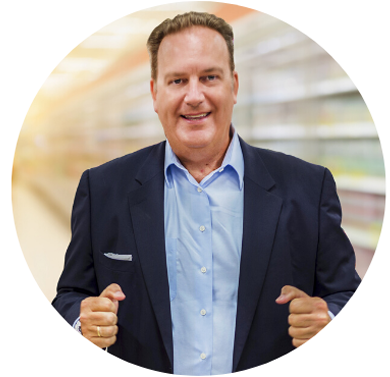 “Hi I’m Tim, and I love the food business! I’ve been helping large and small companies and entrepreneurs achieve success for decades. My consulting projects have contributed to major successes for my clients, including many with 100%+ year-over-year growth rates. I enjoy sharing my expertise, and hope you find these blog posts enlightening. Please reach out to me with any questions or comments.”


Share This Story
Related Posts



Let’s Talk



What We Do
 We help food entrepreneurs and established companies get their products onto shelves and into the hands of consumers. Through personalized collaboration, you’ll learn to succeed using a proven path of marketing, sales, merchandising, distribution and business growth strategies. We’ve generated over $1 billion in revenue and company valuations for our clients. Let us put our expertise to work for you.


