
Want to Import Food to the U.S.? Start With This $2.6 Trillion Opportunity

The $2.6 Trillion Reason to Bring Your Food Product to the U.S.
The United States is not simply another market to consider. For international food brands, it can be the market that changes the trajectory of the entire business.
The U.S. represents an estimated $2.6 trillion consumer market, creating enormous opportunities for companies with innovative food, beverage, supplement, and consumer products. Within that enormous marketplace, individual categories can represent billions of dollars in annual consumer spending.
So, if you have a product that is already succeeding in Europe, Asia, Latin America, Australia, or another international market, an important question deserves to be asked:
Why isn’t your product in the United States yet?
In this YouTube Short, Tim Forrest breaks down why the U.S. market deserves serious consideration for international brands and where some of the biggest opportunities can be found.
Watch the video here
The video is short, but the opportunity it discusses is anything but.
The U.S. Food Market Is Too Large to Ignore
Food entrepreneurs sometimes think about international expansion in terms of geography.
They look at the number of countries they could enter and assume that spreading across several markets is the best way to grow.
I often encourage brands to think differently.
Instead of asking, “How many countries can we sell in?” ask:
“Which market gives us the greatest opportunity to build a meaningful business?”
For many food brands, the answer deserves to be the United States.
The U.S. has a massive consumer base, sophisticated retail infrastructure, established distribution networks, and consumers who are constantly looking for new products and new experiences.
That creates opportunities for established international brands and emerging companies alike.
There Is a Difference Between Entering the U.S. and Selling in the U.S.
Getting a product into the United States is one thing.
Building a successful U.S. business is something entirely different.
A container arriving at a U.S. port does not mean you have entered the market successfully.
You need a plan for:
- FDA compliance
- U.S. food labeling
- Import documentation
- Foreign Supplier Verification Program requirements
- U.S. importer responsibilities
- Customs clearance
- Warehousing
- Distribution
- Retail positioning
- Pricing
- Consumer demand
- Sales velocity
This is where international brands can get into trouble.
They see the size of the American market and immediately want to ship.
I want to see the strategy before the shipment.
Watch the Video Before You Make Your U.S. Expansion Decision
In the YouTube Short, Tim Forrest explains why the U.S. represents such a significant opportunity and why international companies should take a closer look at the categories where consumer spending is already substantial.
Watch the full Short here
Then ask yourself a more important question:
Is my product actually prepared to compete in the United States?
That question can save you a tremendous amount of time and money.
Food Supplements Alone Represent an Enormous Opportunity
The video highlights food supplements as one example of the scale available in the United States, with the category generating tens of billions of dollars in annual sales.
But supplements are only one part of the broader opportunity.
The American consumer market spans an enormous range of categories, including:
- Snacks
- Beverages
- Specialty foods
- Functional foods
- Organic products
- Sauces and condiments
- Bakery products
- Frozen foods
- Health and wellness products
- Dietary supplements
- International and ethnic foods
The opportunity is not simply finding a large category.
It is finding the right opening within that category.
That distinction matters.
Where Is the Real Opportunity?
A large category does not automatically mean your product will succeed.
You need to identify where your product can create a meaningful advantage.
I look for questions such as:
What consumer problem does the product solve?
What makes it different from the products already available?
Who is the target shopper?
What price will the U.S. consumer pay?
Where should the product be sold?
How quickly can it move off the shelf?
Can the supply chain support growth?
Can the product meet U.S. regulatory requirements?
These questions transform a general idea about “selling in America” into an actual market-entry strategy.
Importing Food to the U.S. Requires Preparation
One of the most expensive mistakes an international food company can make is treating import compliance as something to figure out after the product has been manufactured.
By then, you may already have packaging printed, inventory produced, containers scheduled, and customers waiting.
If a problem is discovered at that point, fixing it can become extremely expensive.
Depending on the product, importers may need to address:
FDA Facility Registration
Foreign food facilities generally need to be properly registered with the FDA when required by law.
U.S. Food Labeling
Your existing international label may not satisfy U.S. requirements. Ingredient statements, allergen declarations, Nutrition Facts, product identity, net quantity, and other requirements need to be reviewed.
FSVP
Food importers have responsibilities under the Foreign Supplier Verification Program. This is an important part of demonstrating that foreign suppliers are producing food in a manner that meets applicable U.S. food safety requirements.
Prior Notice
Food shipments generally require Prior Notice to FDA before arrival. Incorrect or incomplete information can create unnecessary problems.
Customs Documentation
Commercial invoices, product descriptions, classifications, country-of-origin information, and other import documentation must be accurate and consistent.
These are not minor administrative details.
They can determine whether your shipment moves smoothly or becomes an expensive problem.
The U.S. Market Rewards Prepared Brands
The companies that succeed in the United States understand that compliance and commercial strategy have to work together.
A perfectly compliant product that nobody wants to buy is not a successful import.
A fantastic product with a non-compliant label is not a successful import either.
You need both.
That is where experience becomes valuable.
What Tim Forrest Consulting Brings to the Process
For more than 35 years, Tim Forrest has worked with food and CPG companies navigating the complexities of the U.S. market.
Tim Forrest Consulting helps international and emerging brands address the critical steps between having a product and successfully selling that product in America.
That includes support with:
- FDA compliance
- FSVP strategy
- Import readiness
- Food labeling
- Regulatory documentation
- U.S. market entry
- Retail strategy
- Distribution planning
- Product positioning
- Growth strategy
The goal is not simply to get your container through a port.
The goal is to help you build a business that can succeed after the container arrives.
Do Not Let the Size of the U.S. Market Fool You
The size of the American market is both its greatest opportunity and one of its greatest challenges.
There are millions of consumers.
There are thousands of retailers.
There are established brands competing for attention.
And there are complex regulatory requirements governing imported food.
You cannot approach this market casually.
You need to understand where your product fits, who will buy it, how you will distribute it, and whether your company is ready to support demand.
Your First U.S. Shipment Should Not Be Your Experiment
I have seen companies spend significant money producing and shipping inventory before they have answered the most basic questions about entering the market.
That is backwards.
Your first shipment should be the result of a strategy.
Before you ship, you should know:
- Who your customer is
- Where you intend to sell
- What your product should cost
- How your product will be positioned
- What regulatory requirements apply
- Who is responsible for importing it
- Where the inventory will go
- How you will support retail and distribution
- What success will look like
When those pieces are in place, the shipment becomes the execution of a plan rather than a gamble.
The $2.6 Trillion Question
The opportunity is enormous.
But the real question is not whether the United States is a large market.
We already know it is.
The question is whether your product is ready to take advantage of it.
If you have an innovative food product, an established international brand, or a growing company considering U.S. expansion, now is the time to evaluate the opportunity before you invest heavily in inventory and logistics.
Watch the YouTube Short here
Then, if you are serious about bringing your product into the United States, talk to Tim Forrest Consulting.
Ready to Bring Your Product to the U.S.?
Tim Forrest Consulting helps international and emerging food and CPG brands navigate FDA compliance, FSVP, import readiness, U.S. retail strategy, and market expansion.
Don’t start with the container.
Start with the strategy.
Book a strategy consultation at: https://timforrestmarkets.com
The U.S. market is enormous. The opportunity is real. The key is entering it prepared.
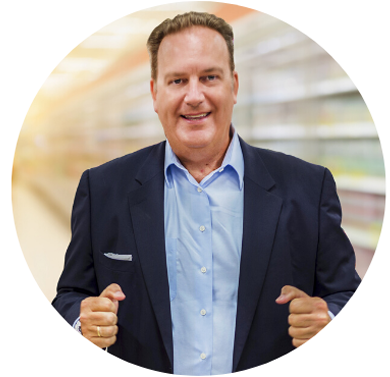 “Hi I’m Tim, and I love the food business! I’ve been helping large and small companies and entrepreneurs achieve success for decades. My consulting projects have contributed to major successes for my clients, including many with 100%+ year-over-year growth rates. I enjoy sharing my expertise, and hope you find these blog posts enlightening. Please reach out to me with any questions or comments.”


Share This Story
Related Posts






Let’s Talk





What We Do
 We help food entrepreneurs and established companies get their products onto shelves and into the hands of consumers. Through personalized collaboration, you’ll learn to succeed using a proven path of marketing, sales, merchandising, distribution and business growth strategies. We’ve generated over $1 billion in revenue and company valuations for our clients. Let us put our expertise to work for you.


