
Importing Food Products to the U.S. (Part 2): What Happens Once Your Shipment Reaches the Port
Importing food products into the United States involves far more than shipping a container and waiting for it to arrive. In this second installment of our “Importing Food Products to the U.S.” series, Tim Forrest breaks down what truly happens at the port of entry — and what food brands must prepare for to ensure their products clear smoothly.
For decades, Tim Forrest Consulting has helped international brands navigate U.S. import requirements, FDA regulations, documentation, and port procedures. In this video, Tim shares the detailed steps your product will go through from arrival to warehouse delivery.
What Happens at the Port of Entry: A Step-by-Step Overview
Once your shipment arrives in the United States, several critical processes begin immediately. Tim explains each step so importers know exactly what to expect — and how to avoid delays and refusals.
1. Port of Entry: Customs and Border Protection (CBP)
CBP reviews your shipment for admissibility, documentation accuracy, and compliance. Their role includes:
-
Verifying origin and tariff classification
-
Reviewing commercial invoices
-
Confirming declared quantities and product descriptions
-
Checking for compliance with all partner government agencies (including FDA)
Any discrepancies can trigger a hold, inspection, or delay.
2. Prior Notice Filing
Before food products can enter or even arrive at a U.S. port, importers must file Prior Notice with the FDA. This filing includes:
-
FDA food product codes
-
Commodity type
-
Identity of the manufacturer
-
Country of origin
-
Anticipated arrival details
Incorrect or incomplete Prior Notice is one of the most common reasons for entry refusals.
3. Shipping & Commercial Invoice Requirements
Tim explains the importance of ensuring commercial invoices include the correct:
-
Product descriptions
-
Harmonized Tariff Codes (HTS)
-
Lot codes and quantities
-
Total weights
-
Pricing
-
Manufacturer and exporter details
These documents help determine admissibility and allow CBP and FDA to verify that all information aligns across the entry.
4. Packaging According to FDA Guidelines
All food packaging must comply with U.S. rules:
-
Correct Nutrition Facts Panel format
-
Ingredient statement in descending order
-
Allergen declarations
-
Labeling for country of origin
-
Net quantity statements
-
Proper placement and font sizing
Improper packaging can trigger holds, relabeling orders, or even refused entry.
5. Entry Refusals: Why They Happen
Many brands underestimate how easily a shipment can be refused. Common issues include:
-
Incorrect or missing Prior Notice
-
Non-compliant packaging
-
Missing language on labels
-
Ineligible facility or manufacturer
-
Incorrect FDA product codes
-
Documentation inconsistencies
A refusal doesn’t just cause delays — it creates added costs, storage fees, re-export requirements, or potential destruction of product.
6. FDA Product Codes & Paperwork
Tim explains how FDA product codes must accurately reflect your:
-
Product category
-
Processing method
-
Packaging type
-
Intended use
These codes determine how the FDA screens your product and what compliance criteria apply.
7. Cleared Port → Warehouse Delivery
Once CBP and FDA release your shipment, it moves to:
-
Your contracted public warehouse
-
Distributor warehouse
-
Your own U.S. facility
From here, products are redistributed to fulfill retailer and distributor orders across the United States.
This final step is where operational efficiency becomes critical: incorrect documentation or poor preparation can slow fulfillment and delay retailer deliveries.
Why Expert Support Matters
Successfully importing food products into the United States requires knowledge, preparation, and precise execution. Tim and his team have guided international brands for decades by providing complete U.S. entry support, including:
-
FDA & CBP compliance
-
Labeling and packaging review
-
Prior Notice preparation
-
Port coordination
-
FSVP importer support
-
Documentation and regulatory guidance
-
Retail and distribution strategy
“Getting your product into the U.S. is not luck — it’s a process. When you understand each step, you avoid delays, refusals, and costly mistakes.”
— Tim Forrest
Ready to Bring Your Food Product Into the United States?
If you have an innovative food product or a growing brand and want expert guidance navigating U.S. port entry, documentation, FDA compliance, or retail distribution — Tim can help.
👉 Schedule your appointment at www.timforrest.com
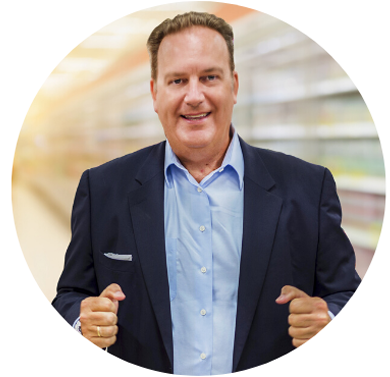 “Hi I’m Tim, and I love the food business! I’ve been helping large and small companies and entrepreneurs achieve success for decades. My consulting projects have contributed to major successes for my clients, including many with 100%+ year-over-year growth rates. I enjoy sharing my expertise, and hope you find these blog posts enlightening. Please reach out to me with any questions or comments.”


Share This Story
Related Posts



Let’s Talk




What We Do
 We help food entrepreneurs and established companies get their products onto shelves and into the hands of consumers. Through personalized collaboration, you’ll learn to succeed using a proven path of marketing, sales, merchandising, distribution and business growth strategies. We’ve generated over $1 billion in revenue and company valuations for our clients. Let us put our expertise to work for you.


