
The Market Expansion Strategy Behind a $16M Food Brand Growth
Raising capital is not the hardest part of growing a food brand.
Using that capital effectively is.
I have worked with brands that secured significant funding, only to struggle with execution. They expanded too quickly, entered the wrong markets, or failed to build the operational foundation needed to support growth.
In one case, we helped guide a food brand through a $16 million growth phase. The capital was important, but the real driver of success was the strategy behind how that capital was deployed.
Growth in the food industry is not about speed. It is about sequence, discipline, and proof.
The Problem Most Funded Food Brands Face
When a brand raises capital, there is immediate pressure to scale.
More distribution.
More products.
More markets.
However, without a structured expansion plan, this approach creates:
- Weak sales velocity
- Operational strain
- Inefficient use of capital
- Reduced confidence from retailers and investors
Capital amplifies your strategy. If the strategy is unclear, capital accelerates mistakes.
The $16M Market Expansion Approach
The strategy we implemented focused on controlled expansion with measurable proof at each stage.
Rather than spreading resources across multiple markets, we followed a disciplined progression:
1. Validate the Core Market
Before expanding, we focused on strengthening performance in a defined market.
This meant:
- Improving velocity at the shelf level
- Refining pricing and positioning
- Understanding consumer behavior
- Identifying repeat purchase patterns
This stage builds confidence and generates the data needed to support expansion.
2. Build Density Before Distance
Instead of entering new regions immediately, we expanded within the existing market.
This created:
- Stronger brand recognition
- More efficient distribution
- Higher inventory turnover
- Better retailer relationships
Density drives efficiency. Efficiency drives profitability.
3. Expand Regionally With Proof
Once the brand demonstrated consistent performance, we expanded into nearby regions with similar market dynamics.
At this stage, the brand was no longer testing. It was replicating a proven model.
This allowed for:
- More predictable sales performance
- Stronger distributor partnerships
- Increased negotiating power with retailers
Retailers respond to proof, not projections.
4. Align Operations With Growth
As distribution expanded, we ensured that operations could support the increased demand.
This included:
- Production capacity planning
- Supply chain coordination
- Inventory management systems
- Compliance with U.S. regulatory requirements
Scaling without operational alignment leads to breakdowns. Strong systems support sustainable growth.
5. Use Capital With Precision
The $16 million was not spent randomly. It was allocated strategically across:
- Market expansion
- Trade support and promotions
- Operational infrastructure
- Brand development
Every dollar was tied to a measurable objective.
Capital should create momentum, not confusion.
Why This Approach Works
This strategy works because it aligns with how the U.S. food market operates.
Retail buyers evaluate:
- Sales velocity
- Consistency
- Supply reliability
- Category fit
They are not investing in potential. They are investing in performance.
By building proof at each stage, the brand reduced risk for retailers and created stronger opportunities for expansion.
What This Means for International Food Brands
For brands looking to import food into the United States, this approach is even more critical.
The U.S. market is competitive and data-driven. Entering without a structured plan often leads to:
- Slow-moving inventory
- Distributor challenges
- Regulatory complications
- Missed growth opportunities
A disciplined expansion strategy allows international brands to:
- Learn the market
- Refine their positioning
- Build credibility with buyers
- Scale with confidence
Growth Is Built, Not Rushed
The most successful food brands are not the ones that move the fastest.
They are the ones that move with intention.
They validate before they scale.
They build density before expanding outward.
They align operations with demand.
This is how brands turn capital into long-term growth.
Ready to Build Your Growth Strategy?
If you have an innovative food product or a growing brand and want to scale into the U.S. market with a proven strategy, schedule a session with Tim Forrest.
👉 Book your strategy session at: www.timforrestmarkets.com
For more insights and proven frameworks, visit:
👉 www.timforrest.com
Tim Forrest Consulting helps international and emerging food and CPG brands enter and grow in the U.S. market. With more than 35 years of experience, the firm specializes in FDA compliance, import strategy, retail readiness, and scalable brand growth.
Your next stage of growth starts with the right strategy.
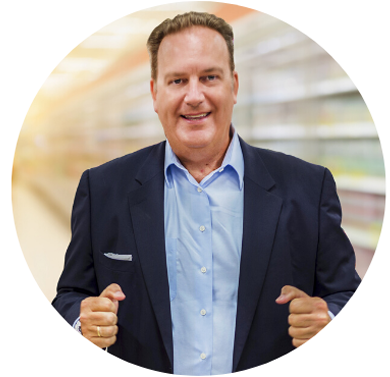 “Hi I’m Tim, and I love the food business! I’ve been helping large and small companies and entrepreneurs achieve success for decades. My consulting projects have contributed to major successes for my clients, including many with 100%+ year-over-year growth rates. I enjoy sharing my expertise, and hope you find these blog posts enlightening. Please reach out to me with any questions or comments.”


Share This Story
Related Posts



Let’s Talk




What We Do
 We help food entrepreneurs and established companies get their products onto shelves and into the hands of consumers. Through personalized collaboration, you’ll learn to succeed using a proven path of marketing, sales, merchandising, distribution and business growth strategies. We’ve generated over $1 billion in revenue and company valuations for our clients. Let us put our expertise to work for you.


