
Why the FDA Puts Imported Food on Hold (and How to Avoid It)
FDA “holds” stop your shipment at the border while questions get answered. They’re not automatic refusals—but they do cost time and money. Most holds come down to preventable issues: incomplete paperwork, misbranding/labeling errors, missing FSVP records, undeclared allergens, unsafe or unapproved additives, contamination, or tampering concerns. The fix: align your product, label, and documents with U.S. law before the container sails—and have your verification ready when FDA asks.
FDA’s Role—What They’re Looking For
The FDA protects U.S. consumers by verifying that imported foods are:
-
Safe: free from contamination, tampering, and dangerous pathogens.
-
Correctly labeled: compliant with FFDCA, FPLA, and PHS Act requirements.
-
Properly documented: including FSVP records showing your U.S. importer verified the supplier and product.
-
Truthful: no misleading claims, accurate ingredients, net quantity, and allergens.
“Hold” vs. “Refusal”—Know the Difference
-
FDA Hold (Detention/Examination): A temporary stop. FDA requests documents, sampling, or corrective information. You can respond, correct, or recondition.
-
FDA Refusal: The product cannot enter the U.S. as-is. You may need to export or destroy it. Repeated issues can increase future scrutiny.
Common Reasons FDA Places Shipments on Hold
-
Labeling & Misbranding
-
Missing or incorrect Nutrition Facts, ingredient list, allergen declaration, or net quantity in both U.S. and metric.
-
Claims (“natural,” “no sugar,” structure/function) not supported or used improperly.
-
Non-English label elements required by law not present.
-
-
FSVP Gaps
-
U.S. importer of record lacks verified hazard analysis, supplier approval, or lot-level documentation.
-
No qualified individual or incomplete verification activities.
-
-
Contamination & Tampering
-
Microbiological or chemical adulteration; visible packaging damage; temperature abuse; missing seals.
-
-
Undeclared Allergens
-
Any of the major allergens not clearly disclosed (e.g., milk, egg, fish, shellfish, tree nuts, peanuts, wheat, soybeans, plus sesame).
-
-
Unapproved/Unsafe Additives
-
Colors, preservatives, or novel ingredients not permitted for the intended use.
-
-
Country/Facility History
-
Prior import alerts, detention without physical exam (DWPE), or repeated violations increase exam rates.
-
What Happens During a Hold
-
Notice: You or your customs broker receives an FDA notice (e.g., “May Proceed,” “Hold for Examination,” or “Hold for Documents”).
-
Document Review: FDA requests specific records—labels, invoices, bills of lading, HACCP/PC, FSVP, COAs, process filings (e.g., acidified/low-acid canned foods), etc.
-
Sampling (if needed): FDA may take samples for lab analysis.
-
Decision: If satisfied, FDA releases the shipment. If not, you get conditions for reconditioning or a refusal.
How to Avoid an FDA Hold (Proactive Checklist)
Before production
-
✅ Confirm standard of identity (if applicable) and permissible ingredients/additives.
-
✅ Lock a compliant formula and supplier specs (COAs; allergens mapped).
-
✅ Establish Preventive Controls/HACCP as required; validate critical steps (e.g., pH, heat).
Before printing labels
-
✅ U.S.-ready Nutrition Facts format (serving size, nutrients, %DV).
-
✅ Exact ingredient list in descending order; sub-ingredients declared.
-
✅ Allergen statement (including sesame, when present).
-
✅ Net contents in both U.S. customary and metric.
-
✅ Responsible party name & U.S. address/phone/URL for consumer inquiries.
-
✅ Claims reviewed for substantiation and placement rules.
Before shipping
-
✅ FSVP: Qualified Individual, supplier approval, hazard analysis, verification activities, and lot files ready.
-
✅ Process filings (if acidified/low-acid canned foods) submitted and scheduled process on file.
-
✅ Temperature control plan and transit records.
-
✅ Commercial docs match labels: invoice, packing list, HTS code, country of origin.
-
✅ Broker briefed; entry packet complete and consistent.
If You’re Already on Hold—Do This Now
-
Respond fast, in writing. Acknowledge the notice and confirm you’re compiling documents.
-
Send exactly what FDA requested. Labels, COAs, process filings, FSVP records—clean, organized, and legible.
-
Close gaps, don’t argue. If an error exists (e.g., allergen omission), propose a corrective action or reconditioning plan.
-
Document controls. Provide temp logs, sanitation records, supplier approvals—anything that reduces risk.
-
Engage an expert. An experienced advisor can often shave weeks off resolution.
Examples of “Easy Fixes” That Prevent Hard Delays
-
Switching from “EU Nutrition Table” to U.S. Nutrition Facts and correcting serving sizes.
-
Adding sesame to an allergen statement after reformulation.
-
Replacing a non-permitted color with a U.S.-approved alternative.
-
Aligning net quantity to dual declaration (fl oz + mL; oz + g).
-
Tightening FSVP: finished-product COA, validated kill step, supplier audit notes.
Related Reading
For a step-by-step view of building a smooth U.S. entry program, see: 7 Steps I Use to Guarantee a Seamless U.S. Entry for International Food Brands (recent post on our site).
FAQ (Fast)
Is a “hold” the same as a “refusal”?
No. A hold pauses entry; a refusal denies it. Many holds clear once you supply the right documentation.
Can I relabel or recondition instead of refusing?
Often, yes—if the issue is fixable (e.g., labeling). FDA must approve your plan.
Will a hold hurt future entries?
Repeated issues can increase exams. Demonstrated corrective actions help restore trust.
Bottom Line
FDA holds are preventable. When your label, formula, and FSVP are aligned with U.S. rules before the vessel sails—and your documentation is audit-ready—you turn the border from a roadblock into a checkpoint.
Ready to Ship Without Surprises?
If you have an innovative food product or a growing brand and want a clean, confident U.S. entry, schedule an appointment with Tim Forrest: www.timforrest.com
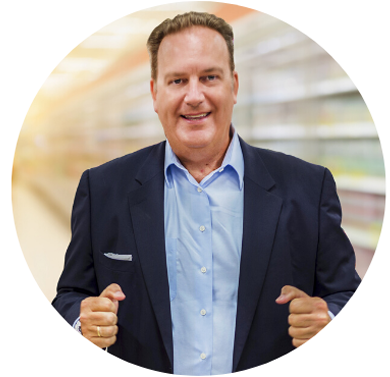 “Hi I’m Tim, and I love the food business! I’ve been helping large and small companies and entrepreneurs achieve success for decades. My consulting projects have contributed to major successes for my clients, including many with 100%+ year-over-year growth rates. I enjoy sharing my expertise, and hope you find these blog posts enlightening. Please reach out to me with any questions or comments.”


Share This Story
Related Posts



Let’s Talk



What We Do
 We help food entrepreneurs and established companies get their products onto shelves and into the hands of consumers. Through personalized collaboration, you’ll learn to succeed using a proven path of marketing, sales, merchandising, distribution and business growth strategies. We’ve generated over $1 billion in revenue and company valuations for our clients. Let us put our expertise to work for you.


